Current Book Projects
Gods and Gadflies: Subversive Speech in the Biblical Prophets and in Plato
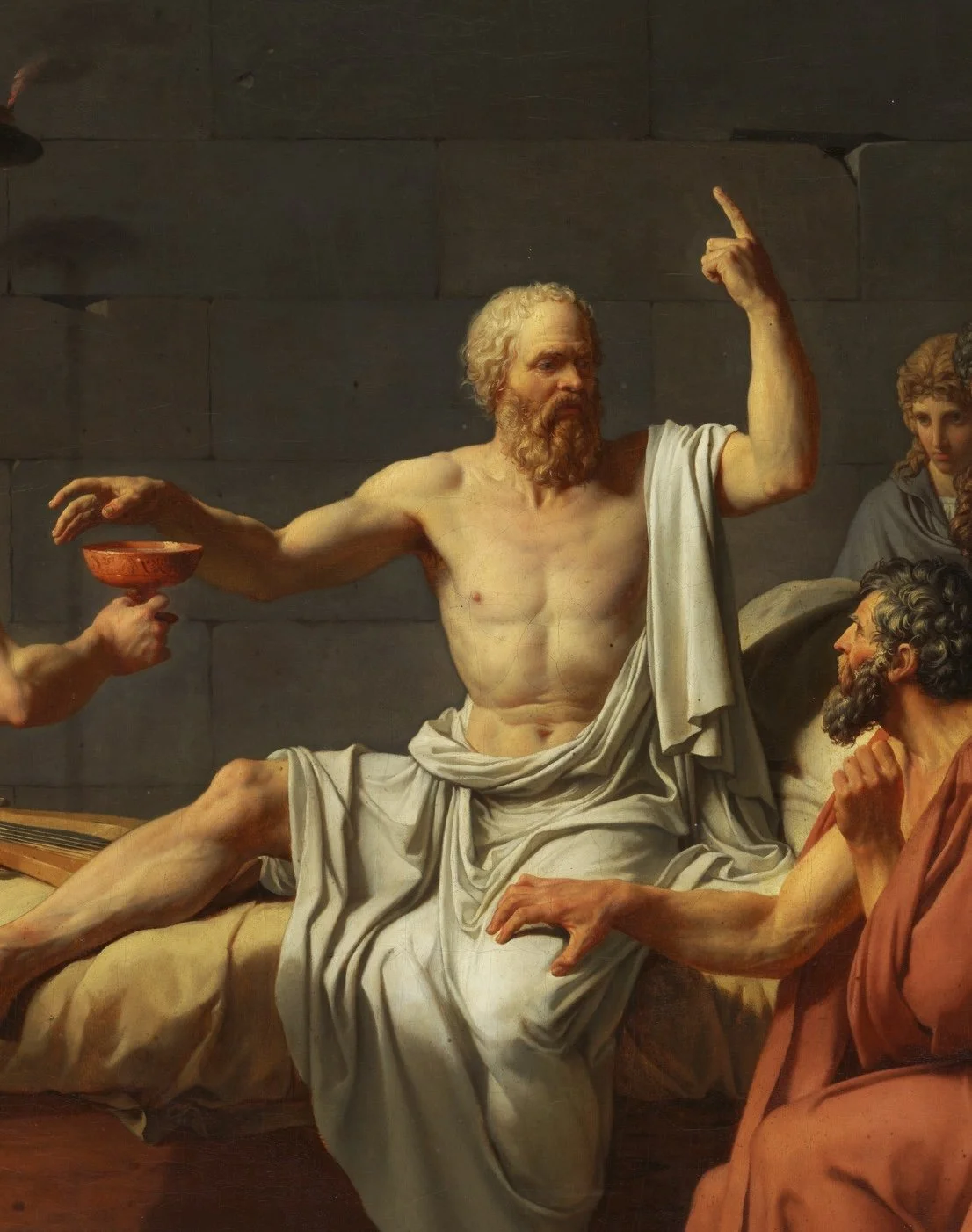
The Hebrew Bible regularly depicts the prophets subverting recognized authority structures, such as the temple, the royal house, and the people’s popular consensus. They do so from the perspective of what they depict as God’s authentic demands, often expressed in terms of justice and integrity. This has long made them a powerful model for social critique. However, it has also raised questions about whether subversive prophecy was a historical reality, how it might have related to other modes of power in ancient Israel, and how it became part of the biblical canon. Gods and Gadflies: Subversive Speech in the Biblical Prophets and in Plato argues that we ought to pay more attention to how the Bible literarily constructs subversive prophetic speech—i.e., how it uses this speech to theorize what prophecy is. The book explores this through a comparison with another great subversive figure from the literature of Mediterranean antiquity: Socrates as Plato presents him in his dialogues. Placing the prophets and Socrates into conversation shows that the presentation of these subversive figures problematizes simplistic dichotomies such as critique versus cooperation, revolution versus institution, marginality versus power, and literature versus history. Instead, what emerges is a shared ancient discourse, attested separately in ancient Israel and classical Greece, in which subversive speech became a potent literary means of working through the complexities of authority.
For a preview of this monograph, please see my recent article “Beyond ‘Athens and Jerusalem’: Integrating Classical Philosophy into the Comparative Study of the Hebrew Bible,” HTR 118 (2025) 381–406 (available open access).
We Are Israel: The Jewish Roots of Christian Supersessionism
Coauthored with Reed Carlson
Under contract with Hendrickson
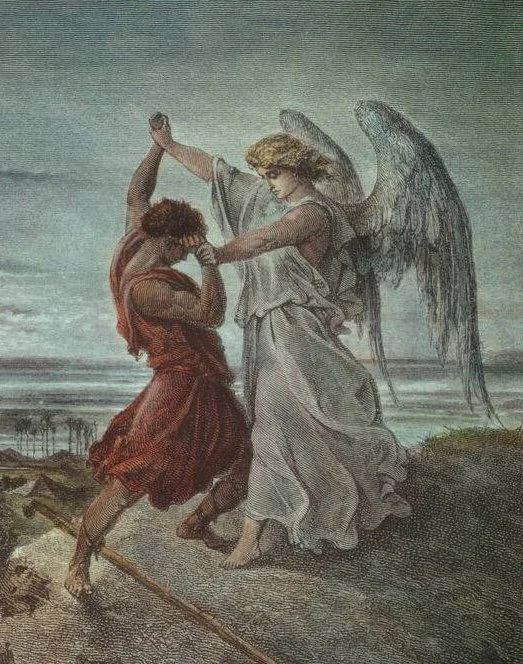
“Supersessionism” is an umbrella term for a cluster of Christian theological ideas rooted in the core claim that, to one extent or another, the church has replaced the Jewish people as the party to God’s covenant. In a word, Christians, not Jews, are the true Israel. It would not be an exaggeration to say that supersessionism is the fundamental crux in Jewish-Christian relations. After the Holocaust, many Christian theologians began to interrogate and even to reject supersessionism as an evil Christian mutation that perverts the Bible and inevitably encourages violence. Today, in many Christian spaces, this has become axiomatic. We Are Israel: The Jewish Roots of Christian Supersessionism problematizes this simplistic story. Without denying that supersessionism has often had devastating consequences for Jews (and others), we show that the common portrayal of supersessionism as an entirely negative Christian innovation is both historically and theologically inaccurate. Rather, supersessionism organically develops discourses that are native to the Hebrew Bible and shared with Second Temple and rabbinic Judaism. As Jon D. Levenson puts it, “Nowhere does Christianity betray its Jewish roots more than in its supersessionism.” Writing as Christian and Jewish Bible scholars who are grounded in the historical study of the ancient world and engaged with these texts as living scriptures for our respective communities, we trace these Jewish roots in terms of five key themes of Christian supersessionism. In so doing, We Are Israel offers a more nuanced framework for thinking about supersessionism as a reflection of the shared heritage of these traditions—and therefore as a starting point, not an obstacle, for Jewish-Christian dialogue.
The Warrior God and His Foreign Messiah:
Cyrus the Great, Military Mythologies, and the Creation of the Jewish People in Second Isaiah
Second Isaiah celebrates the Achaemenid emperor Cyrus the Great as YHWH’s “anointed” (messiah/משׁיח; Isa 45:1) because he restored the exiled Judahites to their land after defeating Babylon. In The Warrior God and His Foreign Messiah: Cyrus the Great, Military Mythologies, and the Creation of the Jewish People in Second Isaiah, I argue that these prophecies transform ancient Near Eastern mythologies of divine combat in response to the new geopolitical realities of world empire. Second Isaiah arrogates divine warrior motifs to Cyrus himself; YHWH directs the Persian king to fight his battles. The goal, I suggest, is to activate the cosmic dimension of the combat mythology in order to configure Cyrus as YHWH’s means of a new cosmogony: through Persia’s military victories, which expanded the boundaries of the biblical writers’ known world, YHWH is literally creating the world again. The centerpiece of this new creation is a new chosen people whose identity is tied to the twin military experiences of exile by Babylon and redemption by Persia. This is one of the earliest attestations of what may be called a concept of “the Jewish people”—i.e., a construal of YHWH’s covenantal ethnos that claims continuity with preexilic Israel but also redefines it. Second Isaiah reflects the “creation” of the Jewish people in two senses: concretely, as a cosmogonic act by YHWH in the fictive world of the text; and conceptually, as a constructive refiguration by the writer in the historical world of sixth-century Babylon.
I am beginning work on this monograph as a fellow of the Katz Center for Advanced Judaic Studies at the University of Pennsylvania during the Fall 2026 semester.